BEFORE YOU CALL AN HVAC Professional
AC CHECKLIST
- Check the thermostat setting. Make sure it’s set to COOL and the temperature is below the current room temperature.
- Replace the thermostat batteries. Weak batteries can cause strange thermostat behavior or a blank display.
- Check the HVAC breaker. Look for a tripped breaker. If it has tripped, it may be reset once. If it trips again, stop and call a professional rather than repeatedly resetting it.
- Check the indoor disconnect/switch. Many furnaces/air handlers have a switch that looks like a light switch. Make sure it wasn’t accidentally turned off.
- Check the air filter. A severely clogged filter can restrict airflow and contribute to cooling problems.
- Check your supply vents. Make sure they’re open and aren’t blocked by furniture, rugs or other objects.
- Check the return-air grilles. Make sure large return grilles aren’t obstructed.
- Look at the outdoor unit. Is it running? Don’t open or work inside it—just observe whether the fan/unit appears to be operating.
- Look for ice. If you see ice on the refrigerant lines or indoor/outdoor equipment, don’t try to remove it mechanically. Turn cooling off and get professional help.
- Give the system a few minutes. After changing thermostat settings or restoring power, some equipment has a built-in delay before restarting.
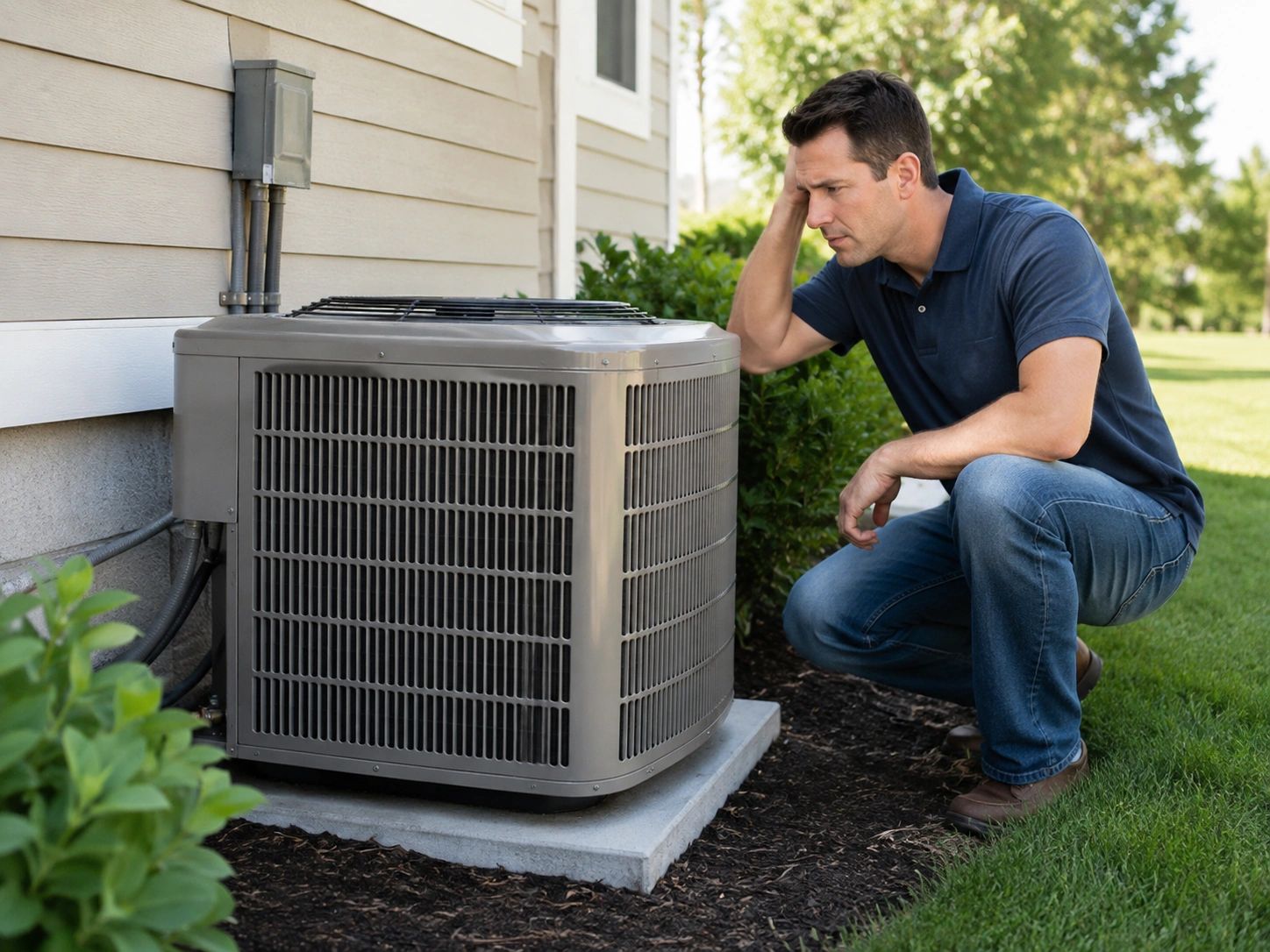
AC Not Cooling? Start Here Before You Call
Your AC may not need a major repair. Check these common problems first. If these simple steps don’t solve it, Local Comfort can connect you with a local HVAC professional.
AC Running But Not Cooling
— may point to restricted airflow, a dirty coil, refrigerant issues, or an outdoor-unit problem. If the system runs continuously and the temperature keeps rising, it likely needs diagnosis.
Outside Fan Not Running
— if the indoor blower runs but the outdoor fan does not, the system may have an electrical, capacitor, fan-motor, or control issue. Turn cooling off rather than repeatedly resetting it.
AC Won't Turn On
— after the basic checklist has already been completed, a system that still won’t start may have a failed control, safety switch, electrical component, or equipment problem.

Other Common AC Problems.
Think It Needs Refrigerant?
Low refrigerant may mean there is a leak or another system problem. Refrigerant normally circulates in a closed system, so repeatedly adding more without finding the cause may not solve the underlying issue.
How much does an AC recharge cost? See article below
AC Freezing Up
Ice on the indoor coil or refrigerant lines may be caused by restricted airflow, a dirty filter or coil, blower problems, or refrigerant issues. Turn the cooling off and let the ice thaw before having the system checked.
Water Around the AC
Water near the indoor unit may come from a clogged condensate drain, frozen coil, drain-pan problem, or another moisture issue. If water is reaching ceilings, flooring, or electrical equipment, shut the system off and get help quickly.
More Common AC Problems.
Think It Needs Refrigerant?
Low refrigerant may mean there is a leak or another system problem. Refrigerant normally circulates in a closed system, so repeatedly adding more without finding the cause may not solve the underlying issue.
See below for costs explanation.
AC Freezing Up
Ice on the indoor coil or refrigerant lines may be caused by restricted airflow, a dirty filter or coil, blower problems, or refrigerant issues. Turn the cooling off and let the ice thaw before having the system checked.
Water Around the AC
Water near the indoor unit may come from a clogged condensate drain, frozen coil, drain-pan problem, or another moisture issue. If water is reaching ceilings, flooring, or electrical equipment, shut the system off and get help quickly.
Strange AC Noises
Banging, grinding, buzzing, or squealing can point to loose parts, electrical issues, motor problems, or other mechanical trouble. Turn the system off if the noise is severe or suddenly gets worse.
AC Keeps Turning On and Off
Frequent short cycles may be caused by thermostat issues, restricted airflow, an oversized system, electrical problems, or other control issues. Repeated cycling can increase wear and reduce comfort.
High Electric Bill or AC Runs Constantly
If your AC runs much longer than normal, the cause may be poor airflow, dirty coils, duct problems, refrigerant issues, extreme weather, or an aging system that is losing efficiency.
How Much Does It Cost to Recharge a Home AC Unit?
What Does an AC Refrigerant Recharge Actually Cost?
A helpful way to estimate refrigerant cost is to look at how much refrigerant a typical residential system holds.
As a general example, an average residential air-conditioning system may hold around 8 pounds of refrigerant. If refrigerant costs approximately $160 per pound, a complete recharge could cost roughly:
8 pounds × $160 = $1,280
Fortunately, most systems do not need a complete recharge unless they have lost most or all of their refrigerant because of a significant leak, major repair, or other problem.
A more typical refrigerant addition might be around 2 pounds.
At approximately $160 per pound:
2 pounds × $160 = about $320
Keep in mind that these are example averages, not guaranteed prices. Refrigerant costs vary considerably depending on the type of refrigerant, local pricing, the amount needed, and whether leak detection or repairs are required.
Why Is the Amount of Refrigerant Important?
An air conditioner does not normally “burn up” or consume refrigerant.
If a system that originally held approximately 8 pounds is several pounds low, the important question isn't simply:
“How much refrigerant should we add?”
The better question is:
“Where did the refrigerant go?”
A small loss may have occurred gradually over time, while a system that has lost most of its charge could have a significant leak that needs to be located and repaired.
Simply adding refrigerant without understanding the cause could mean paying hundreds of dollars today only to have the system become low again later.
That is why a good diagnosis should consider both the cost of recharging the system and the cause of the refrigerant loss.